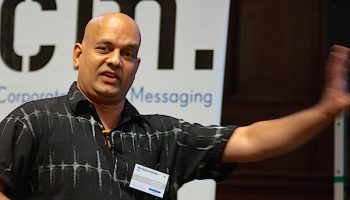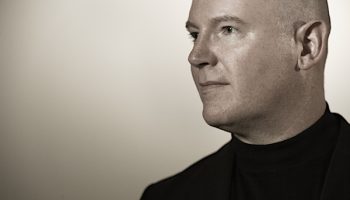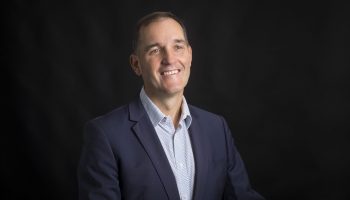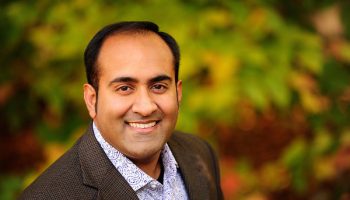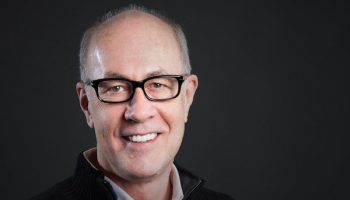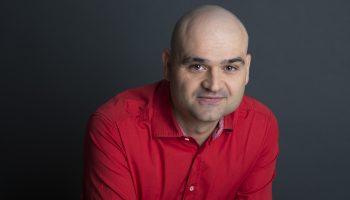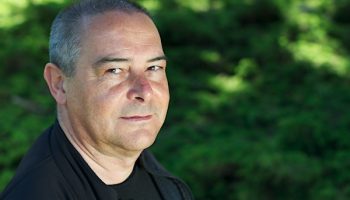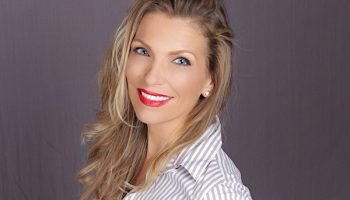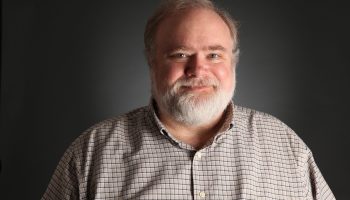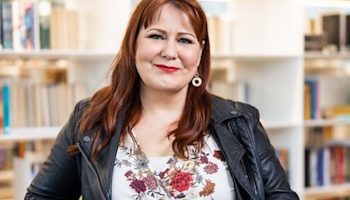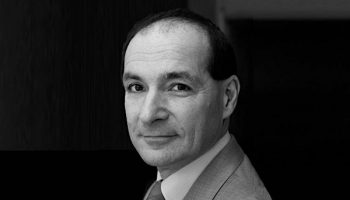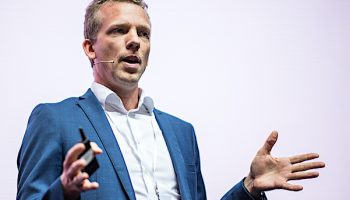

The Futures Agency (TFA) was founded by leading Futurist Gerd Leonhard in Zürich, in 2010. TFA is a unique and globally engaged group of over 50 well-known futurists and amazing keynote speakers that focus on online and virtual events, conferences, talks and advisory work.
We strive to create and share powerful narratives that help our clients and audiences to discover, understand and design their preferred future, and to make wise decisions, here and now.
TAKE A LOOK
TFA provides powerful, experienced and unforgettable keynote speakers and engaging presenters for all kinds of conferences, shows and events, both for single bookings as well as for entire programs, with a focus on virtual events.
We also produce complete digital event programs, online and on-location future-training sessions, advisory services and C-Level consulting, media commentary, film production and many other creative services, globally.
TAKE A LOOK
Gerd Leonhard is a globally recognised and top-rated futurist, humanist, author, film-producer and TV-host. Pursuing the concept of ‘practical wisdom’, Gerd foregoes the all-too-frequent techno-optimism in favour of progressive humanism, balancing exponential technological progress with human needs. Gerd zeroes in on what the future holds for humanity, and how we will create the future we want (rather than just the one we could have).
TAKE A LOOK
Covid19 may be behind us but we still believe that virtual conferencing will become as normal as WhatsApp or Spotify – once we get used to these new modes of communication, and as the technology gets even better, virtual events will become an entirely new industry. Yes, we will always want to meet in person, and face-to-face events will come back – but now that we’ve ‘tasted’ the other options many of us will continue using them. Just like Working from Home – which is suddenly the new normal – Conferencing from Home will become an integral part of everybody’s work/life environment.
The Futures Agency offers a wide range of experienced virtual keynote speakers for any topic, budget, technology platform and in any time-zone. We also offer full-service solutions for many types of events – from small conference that keep your team members in the loop, to large company-meetings, online trainings and large conferences and shows.
TFA can organise entire conferences involving your executives, team-members, clients and partners as well the world’s top keynote speakers, as a complete package or in individual components.
Whether you are looking to design and host a virtual conference, set up a real-life or hybrid event, or need to convert an existing live conference to the virtual stage, TFA can assist you quickly and with deep expertise. We have both the content, the stories and the personalities as well as the technical and practical experience that you may need, and are happy to assist you.
You can select individual speakers or book suitable packages and portfolios of speakers, some of which also include Gerd Leonhard; for events ranging from 20 to 5000 participants, and for any desired duration. Contact us anytime.
The covid19 crisis has reset every aspect of meetings, conferences, events, seminars and public gatherings, and even as we move towards a slow and painful recovery it is clear that the event and conferences business has changed forever. Deep, constantly changing and often confusing restrictions on international travel are certain to continue until a vaccine is deployed globally – and even then we will still struggle with the global economic and financial aftermath, for quite some time. We are not going back to normal.
So while we will eventually meet in RL (real-life) again, we also have learned that the new ways of meeting, learning and collaborating can be quite useful, as well. Enterprises and organisations of all kinds and size, brands, partners and agencies are now taking action to make sure that their voices are still heard. TheFuturesAgency team is ready to collaborate and assist you.
To view a short demo-reel on what our events look like, just hit the PLAY button below (or visit Gerd’s online event playlist on Youtube)
Our keynote visuals are not like everyone else's - we use custom-made animations, video clips, motion designs and other custom-made graphics.
We offer events branded with your corporate identity, if desired.
We can customise our keynotes and related content to fit events of any size (one-time only, or as a series of sessions)
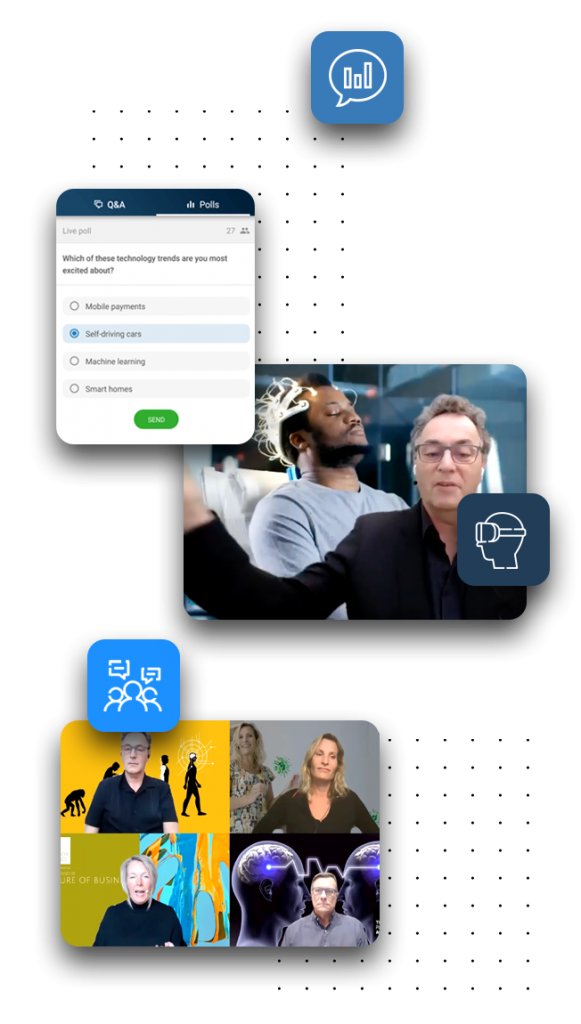
Our speakers and moderators often use customised live polls to engage the participants and to better gauge the results of our engagements.
Our moderators make sure everyone is heard and included, using various chat and linking features
If desired, your sessions can be live-streamed on designated websites, password protected online channels, or the big social media destinations such as Youtube or LinkedIn. HD recordings can be made available as well.